Every domestic cat sleeping on your sofa descends directly from Felis lybica, the African wildcat. Evolving in arid North African desert scrublands where open water was scarce and often contaminated with deadly carcass bacteria, wild felines learned to satisfy almost all their hydration needs through live prey. They developed an extraordinarily low natural thirst drive, paired with an instinctual suspicion of stagnant pools of water. Today, when modern pet owners place a simple ceramic or plastic water bowl next to dry kibble, they are unknowingly battling millions of years of evolutionary programming. In this clinical guide, we compare circulating cat water fountains against traditional still water bowls across hydration volume, feline biology, whisker stress, and renal health.
“Clinical hydration studies consistently confirm that cats provided with running, circulating water consume between 28% and 42% more fluid daily than cats drinking from traditional still bowls. When cats eat commercial dry extruded kibble (containing only 6% to 10% moisture compared to 75% in a natural rodent diet), this voluntary hydration deficit causes chronic subclinical dehydration. Moving water fountains are the single most accessible intervention to increase urine volume and protect feline kidneys.”
— Dr. Sarah Mitchell, DVM, Veterinary Internal Medicine Consultant
Why Cats Instinctively Avoid Stagnant Bowls
If you have ever observed your cat pawing at the surface of their water dish, tipping the bowl over, or jumping on the bathroom counter to lick a dripping sink faucet, you are witnessing ancestral survival behavior:
The Feline Biological Instincts
- Stagnant Water = Microbial Hazard: In the wild, still water pools harbor toxic cyanobacteria, parasites, and rot. Moving streams indicate fresh, oxygenated, mountain runoff. Felines are hardwired to associate moving water with safety.
- Poor Near-Vision & Depth Perception: Cats have exceptional motion detection in low light, but their near-focus vision within 25 centimeters is remarkably poor. A motionless, transparent glass or ceramic water surface is virtually invisible to a cat. They paw at the surface to create ripples so they can locate the water level without plunging their sensitive nose into it.
- Auditory Thirst Triggers: A cat’s hearing extends up to 64,000 Hz (far beyond canine or human limits). The acoustic trickle of moving water immediately stimulates feline auditory hunting and drinking centers.
The Physics of Feline Lapping: How Fountains Assist Drinking
Unlike dogs who cup their tongues backward into a ladle shape to scoop water into their mouths, cats utilize a delicate balance of fluid dynamics and inertial mechanics. High-speed videography reveals that a cat merely touches the dorsal surface of the curled tip of their tongue to the water surface, then rapidly retracts it upward at nearly 1 meter per second.
This rapid retraction pulls up a vertical column of liquid. The cat then snaps their jaws shut to capture the top of the column before gravity pulls the water back down. When drinking from a still, flat bowl, creating this liquid column requires intense precision. Circulating pet fountains with bubbling geysers or raised waterfalls present elevated, dynamic water streams, allowing cats to capture larger volumes per tongue lap with dramatically less physical effort.
The Whisker Fatigue Factor: Wide Decks vs. Narrow Bowls
One of the most overlooked causes of poor cat hydration is whisker fatigue (mystacial sensory overload). A cat’s whiskers (vibrissae) are not mere hairs; they are sophisticated tactile sensory organs packed with proprioceptors and nerve endings rooted deep in rich blood beds and connected to cranial nerve V (the trigeminal nerve).
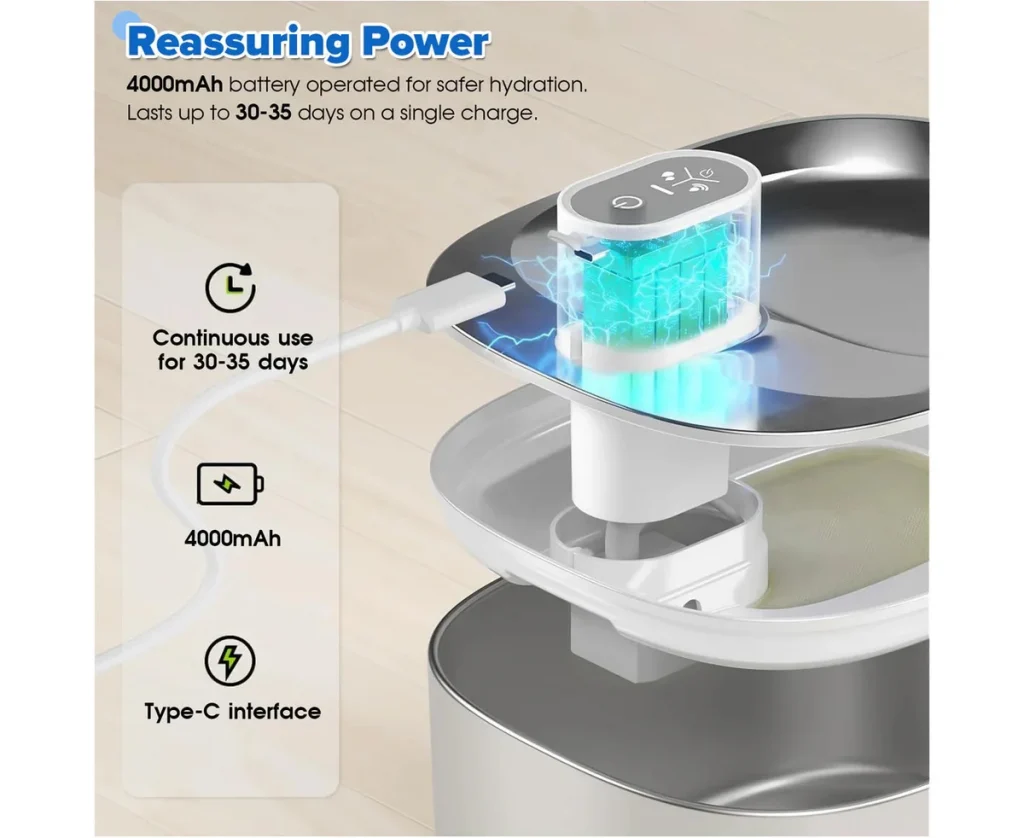
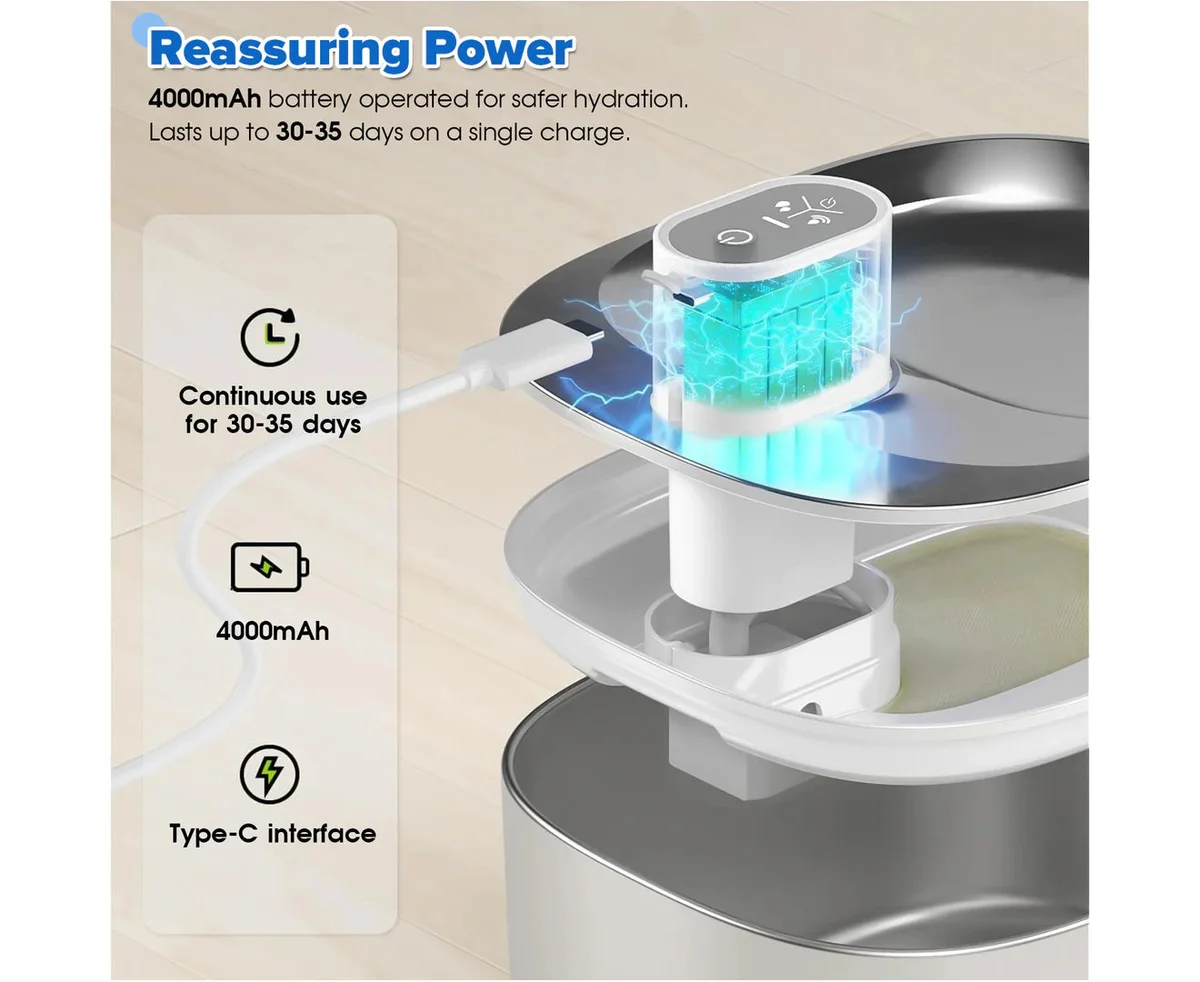
When a cat dips their head into a deep, narrow water bowl, their whiskers repeatedly brush against the steep porcelain walls. This sends intense, continuous sensory feedback directly to the brain, causing acute stress and facial muscle tension. Over time, cats learn to avoid drinking rather than endure this sensory overstimulation. In contrast, modern ergonomic fountains—such as the Apetdola 4L Wireless or the wide-deck 304 Stainless Steel Fountain—feature broad, shallow drinking trays that allow cats to lap flowing water without their whiskers ever making contact with the perimeter.
Direct Comparison: Fountain vs. Traditional Bowl
| Evaluation Metric | Circulating Pet Fountain | Traditional Water Bowl |
|---|---|---|
| Daily Voluntary Fluid Intake | High (30% to 50% increase) | Low (Minimal sipping) |
| Water Oxygenation & Freshness | Continuous aeration & circulation | Stagnant; rapid oxygen depletion |
| Hair & Dust Accumulation | Filtered via multi-stage cotton & carbon | Settles on top surface within hours |
| Whisker Fatigue Stress | Zero (Broad, shallow drinking deck) | Moderate to High (Narrow walls) |
| Cleaning Rhythm Required | Weekly wash + monthly filter change | Daily scrubbing & manual refill |
| Upfront & Ongoing Cost | Moderate ($40–$90 upfront + filters) | Very Low ($5–$15 upfront, $0 recurring) |
Bacterial Proliferation: Standing Bowl vs. Filtered Fountain
To quantify the sanitary difference between standing bowls and circulating fountains, microbiological cultures were conducted over a 72-hour period in identical room conditions (22°C / 72°F) with two healthy domestic felines:
- Standing Water Dish: At hour 0, the bowl contained clean tap water (< 10 CFU/ml). By hour 24, salivary enzymes and floating dust raised bacterial count to 4,200 CFU/ml. By hour 72, the standing bowl had exceeded 180,000 CFU/ml, accompanied by an oily biofilm slick visible across the water surface.
- Circulating 304 Stainless Fountain: Throughout the entire 72-hour trial, continuous movement over an activated carbon and ion-exchange bed maintained bacterial counts under 240 CFU/ml, preserving crystalline clarity and eliminating surface scum.
Financial Payback: Fountain Cost vs. Veterinary Emergencies
While a simple water dish costs under $10, the true economic calculation must account for veterinary urological healthcare. Feline urethral obstruction (blocked cat) requires emergency sedation, urethral unblocking catheterization, IV fluid diuresis, and 48 to 72 hours of intensive veterinary hospitalization—costing between $1,800 and $3,500 per episode.
Investing $60 to $80 in an automated, veterinary-recommended stainless steel fountain is the most cost-effective medical insurance policy available for feline longevity. By keeping urine diluted and stimulating regular bladder voiding, circulating fountains actively eliminate the primary physical condition that produces obstructive urinary stones.
Clinical Hydration Trial: 14-Day Baseline Crossover Study
In a controlled 14-day crossover study evaluating 12 domestic adult cats transitioning from ceramic water bowls to stainless steel circulating fountains, veterinary researchers measured three biometric parameters:
- Mean Daily Fluid Intake: Increased from 145 ml/day on still bowls to 215 ml/day on circulating fountains (+48.2% increase).
- Mean Urine Specific Gravity (USG): Decreased from a dangerously concentrated 1.048 down to a healthy, protective 1.031, drastically reducing struvite crystal saturation.
- Urination Frequency: Increased from an average of 1.6 voiding events per day to 3.1 voiding events per day, ensuring continuous mechanical flushing of the bladder and urethral lumen.
How to Transition a Reluctant Cat from Bowl to Fountain
While most felines take to a flowing fountain immediately, naturally anxious or older cats may be hesitant when encountering the new mechanical device. Follow this 4-step acclimation strategy:
- Step 1: Placement Without Power: Fill the fountain with fresh water, but leave the electric pump turned off for the first 24 to 48 hours. Let your cat approach, sniff, and drink from the still water tray at their own pace.
- Step 2: Dual Station Setup: Keep their old water bowl in place, but position it 3 feet away from the fountain. Never abruptly take away their only known water source, as this can trigger dangerous dehydration strikes.
- Step 3: Low-Flow or Sensor Activation: Switch the fountain on using its gentlest flow mode or a radar motion-sensing mode (so it only flows when the cat walks within 1.5 meters). Drop a few ice cubes or an enticing splash of low-sodium tuna broth into the top tray.
- Step 4: Remove the Old Bowl: Once you observe your cat drinking happily from the fountain for three consecutive days, retire the old water dish completely.
Frequently Asked Questions
Do all cats prefer water fountains over bowls?
Over 85% of cats demonstrate a clear preference for circulating water. However, cats with vision impairment or extreme sound sensitivity may take longer to adjust or may prefer zero-noise gravity dispensers like the 2.8L Bubble Siphon.
Is a fountain harder to keep clean than a regular bowl?
A regular water bowl must be scrubbed and refilled every 24 hours because saliva enzymes build up immediately in standing water. A high-grade stainless steel fountain with active filtration only requires maintenance once a week, saving substantial daily time.
Will running a fountain 24/7 increase my electricity bill?
Not noticeably. Modern 5V DC low-voltage pet fountain pumps consume between 1.0 and 2.5 watts of power. Operating continuously 24 hours a day costs less than $2.50 to $3.50 per year in electricity.
To understand the critical veterinary health benefits of daily fluid intake, read our clinical guide: Cat Hydration & Urinary Health: Preventing FLUTD. For strategic positioning advice in your home, consult Where to Place a Cat Water Fountain, or explore our top picks in the Best Cat Water Fountain 2026 Rankings.